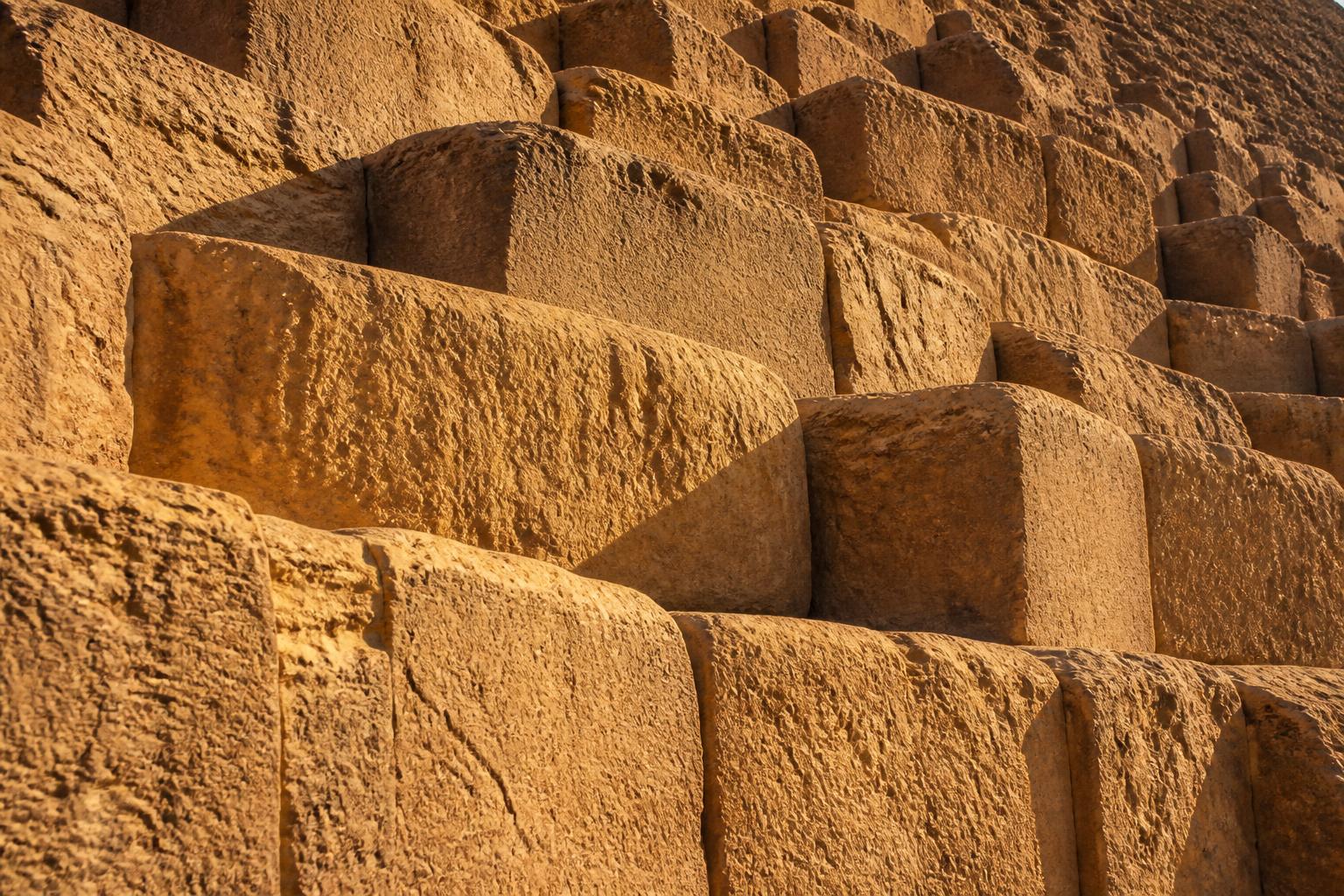
N° 01
Three pyramids, a lion-bodied guardian, and the most photographed plateau on Earth — built across three generations of one Fourth Dynasty family around 2580–2510 BCE.
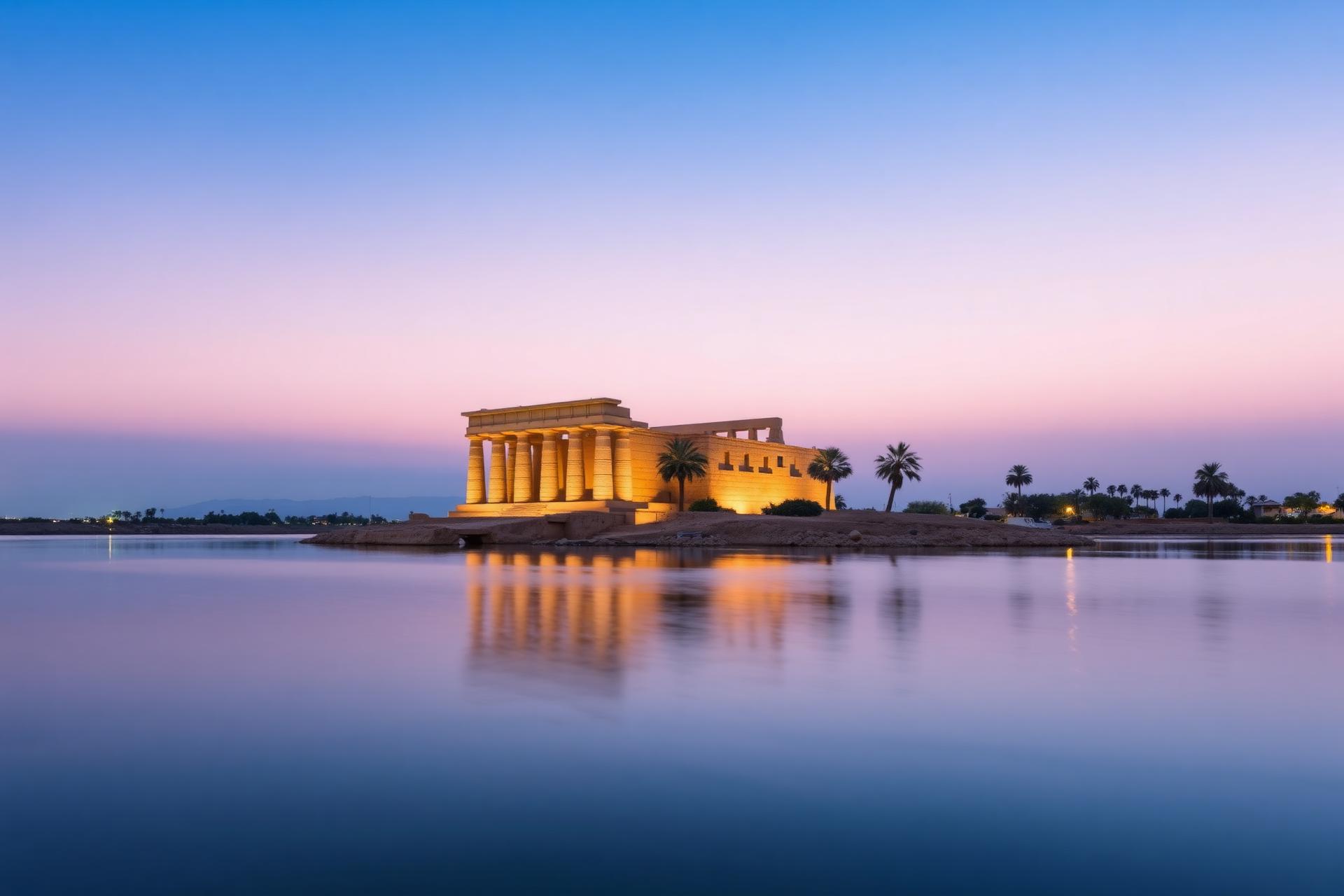
Issue I · The Atlas
A traveler's field guide to the archaeological sites of Egypt — from the busy plateau of Giza to the lesser-known mastabas of the Memphite necropolis. Written with the depth of an Egyptologist, organised for a tourist on the ground.
The Atlas
The Sites
Three pyramids, a lion-bodied guardian, and the most photographed plateau on Earth — built across three generations of one Fourth Dynasty family around 2580–2510 BCE.
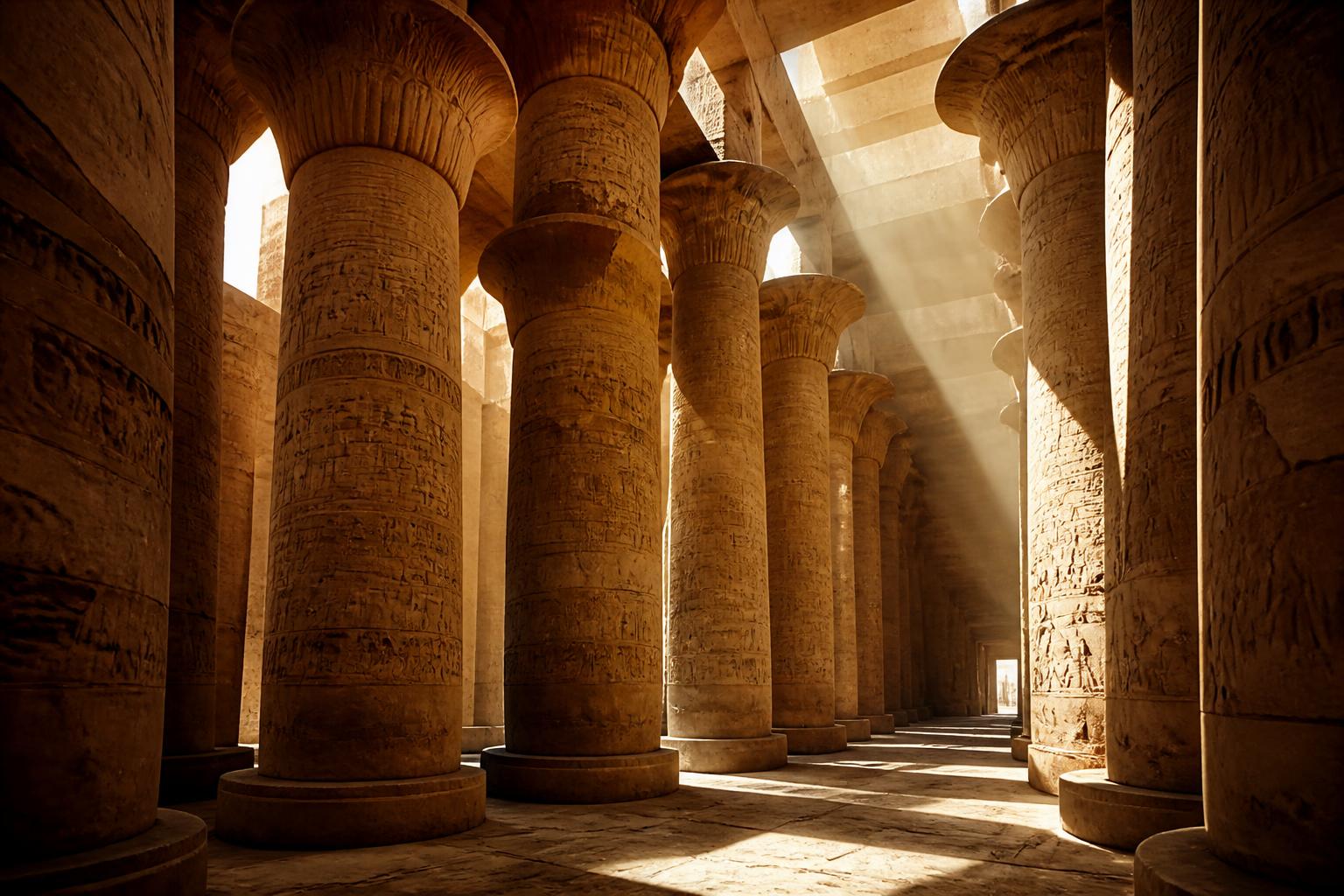
The largest religious complex ever built — a city of pylons, obelisks and 134 papyrus columns added to and rebuilt by thirty pharaohs over two millennia, all to house the god Amun-Re.
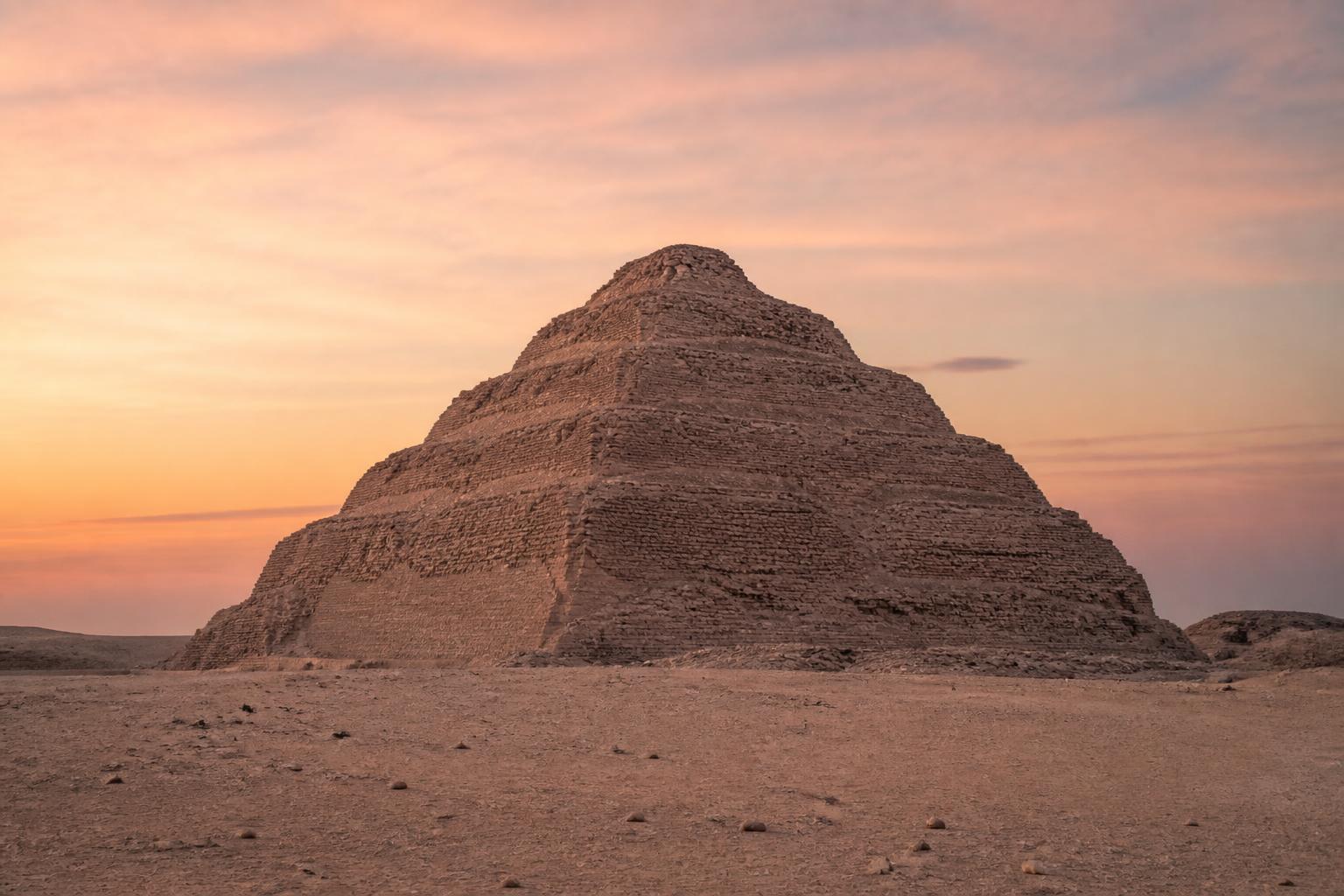
The cemetery of the old capital Memphis, and the most archaeologically active site in Egypt today — home to the Step Pyramid of Djoser, the Serapeum, and a stream of discoveries that have not stopped since 2018.
Still very much open, still extraordinary. Around 120,000 objects across two dusty, beautifully faded floors on Tahrir Square — the Narmer Palette, the Sheikh el-Balad, the Meidum Geese and dozens of other masterpieces that never left when Tutankhamun and the royal mummies moved out to GEM and NMEC.
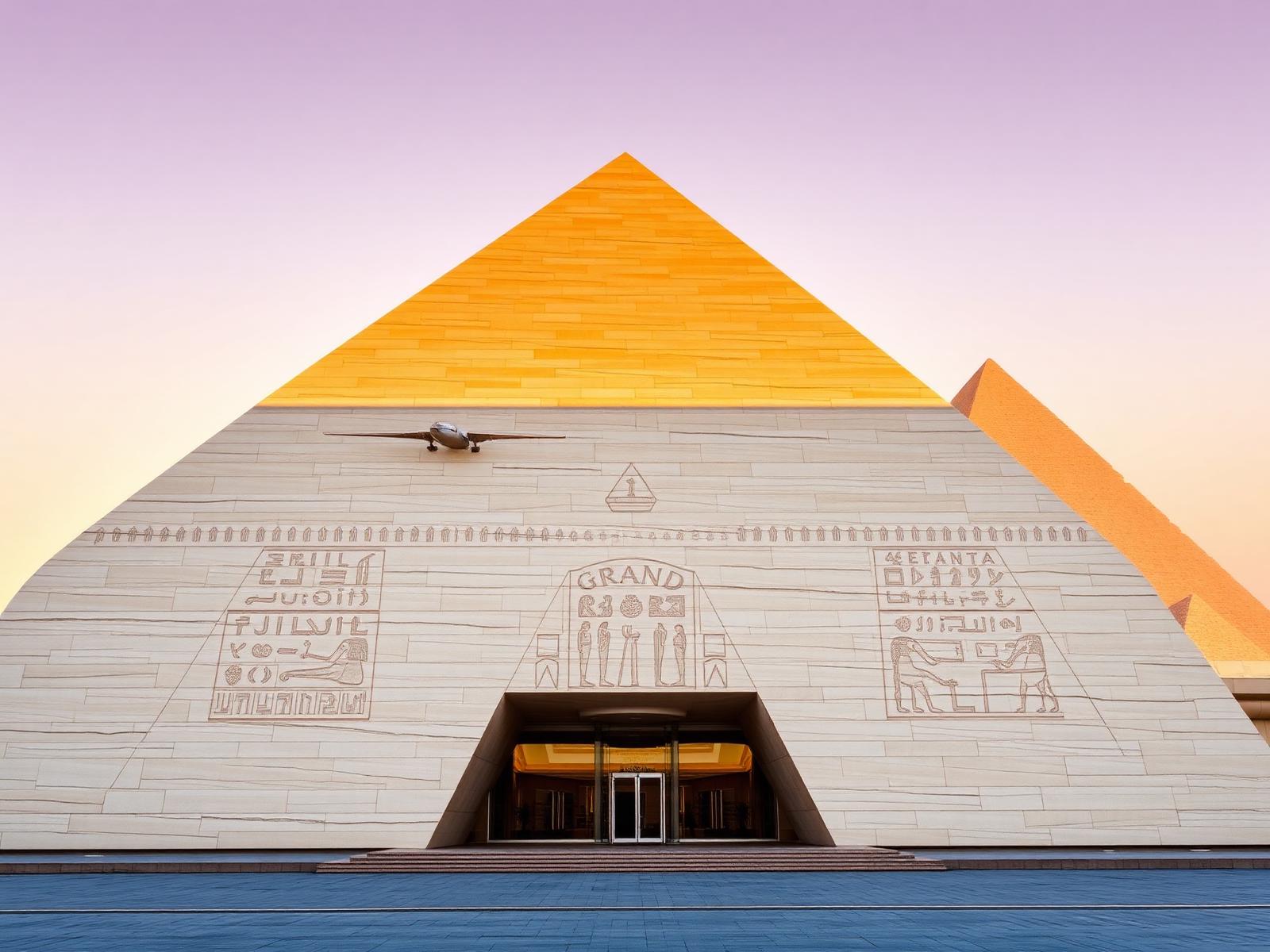
The largest archaeological museum in the world — 500,000 m² of alabaster-clad galleries two kilometres from the Giza plateau, anchored by Tutankhamun's complete tomb assemblage (5,400 objects shown together for the first time) and Khufu's reassembled 4,600-year-old cedar solar boat. Plan a full day; serious visitors plan two.
Home of the Royal Mummies Hall, the moody quiet counterpart to GEM's spectacle. Ramesses II rests here.
An Old Kingdom solar cult centre buried beneath modern Cairo suburbs. Active excavation by the Naughton-era Heliopolis Project keeps producing colossi of Psamtik I and Ramesses II.
Capital of Egypt for most of the Old Kingdom — now mostly underground. The open-air museum holds a colossal fallen statue of Ramesses II and a fine alabaster sphinx.
Sneferu's two pyramids, where pyramid-building got it right on the second try. The Red Pyramid is the only Old Kingdom pyramid whose burial chamber you can still climb into, and you'll often have it to yourself.
Pyramids of Sahure, Niuserre and Neferirkare, plus the world's oldest papyrus archive (the Abusir Papyri). Requires a special ticket and you'll often be the only visitors.
The northernmost pyramid in Egypt, quarried away in antiquity to a stub on a desert ridge. The site of one of the finest royal heads ever found (Djedefre, now in the Louvre).
Amenemhat I and Senwosret I rebuilt the pyramid tradition here after the First Intermediate Period. Now mostly mud-brick mounds; recent Met excavations are reopening tombs.
A stepped tower that collapsed during construction, now a haunting profile against the desert. The tombs of Nefermaat and Rahotep nearby preserve some of the finest Old Kingdom painting.
Amenemhat III's mud-brick pyramid and the foundations of Herodotus's Labyrinth. Site of the Roman-era Fayum mummy portraits — the most haunting faces of late antiquity.
Senwosret II's pyramid plus the workmen's town of Kahun beside it — one of the rare planned settlements preserved from pharaonic Egypt.
Mudbrick streets, granaries and temples of a Roman-period agricultural town. The papyri excavated here in the 1920s rewrote our knowledge of daily Roman Egypt.
Painted rock-cut tombs of Twelfth Dynasty provincial governors, including the famous procession of Asiatic traders entering Egypt — the closest we have to a snapshot of Bronze Age trade.
The short-lived city built by Akhenaten to worship the Aten. A still-readable urban plan in the sand, with the Royal Tomb cut into the cliff behind. Barry Kemp's excavations continue.
Kilometres of underground galleries packed with mummified ibises and baboons sacred to Thoth, plus the perfectly preserved Greek-style tomb of Petosiris.
A great Thoth precinct with reused Amarna talatat blocks visible in the foundations. The standing baboon colossi by the entrance are pure New Kingdom theatre.
The cult centre of Osiris, with Seti I's temple holding the finest relief carving in Egypt and the mysterious water-filled Osireion behind it. The royal cemetery at Umm el-Qaab is the founding ground of the Egyptian state.
The earliest royal cemetery in Egypt, where kings of Dynasty 0 and I were buried. The German Institute (DAI) excavations have rewritten state-formation theory here.
The most complete temple in Egypt, with its astronomical ceiling, crypts, and the Dendera Zodiac (the original is in the Louvre, a cast in place). Best visited at dawn.
The Opet festival's destination, now lit dramatically at night. Ramesses II's pylon, the colonnade of Amenhotep III, and a medieval mosque built inside it — twelfth-century BC to thirteenth-century AD in one section.
The rock-cut royal cemetery of the New Kingdom. KV62 (Tutankhamun), KV17 (Seti I) and KV9 (Ramesses VI) are the essential three; the Luxor Pass Premium opens the gates Litherland and others have spent careers documenting.
The Ramesside queens and princes. QV66, the tomb of Nefertari, is the most beautifully painted chamber in Egypt — book ahead, the per-day visitor cap is strict.
Three temples stacked at the foot of the cliff: Mentuhotep II, Hatshepsut, and Thutmose III. The reliefs of the Punt expedition in Hatshepsut's portico are unmatched.
The best-preserved royal mortuary complex on the West Bank, with original painted relief still vivid on the inner walls and the Sea Peoples reliefs on the exterior.
Ramesses II's mortuary temple. The shattered colossus that inspired Shelley still lies in the second court — the rest is a roofless library of relief.
The walled village of the craftsmen who cut and painted the royal tombs. Their own tombs above the village — Sennedjem, Inherkhau — are jewel-boxes of private painting.
Hundreds of officials' tombs cut into the hills of the West Bank. Rekhmire (TT100), Nakht (TT52), Menna (TT69) and Ramose (TT55) are the four that no visitor should miss.
The remote western branches of the Theban necropolis where the New Kingdom Research Foundation, led by Piers Litherland, identified C4 as the tomb of Thutmose II in 2025. Permit-only.
The painted mudbrick palace and ceremonial harbour of Amenhotep III. Mostly low ruins, but the scale on a satellite view is staggering.
All that survives above ground of Amenhotep III's mortuary temple — for a few centuries the singing colossus that drew Roman tourists. Excavation continues to recover statuary behind them.
A hypostyle hall of the Roman period whose ceiling has just been spectacularly cleaned — vivid blues and reds invisible for two thousand years. The rest of the temple is still buried under the modern town.
Walls, ceilings and even some original doors survive. The temple's surviving foundation deposits and ritual inscriptions are the textbook for how Egyptian temples were built and used.
A mirrored temple to the crocodile-god Sobek and the falcon Haroeris, plus an attached crocodile-mummy museum. Spectacular at sunset above the Nile.
The source of the sandstone for nearly every Theban temple. Carved with stelae, shrines and the toolmarks of an industry that lasted centuries — much overlooked by Nile cruises.
A massive mudbrick enclosure visible from the Nile, plus rock-cut tombs whose autobiographical texts (Ahmose son of Ebana) are core sources for the wars of expulsion against the Hyksos.
Three thousand years of frontier town stacked in one mound: Khnum temple, a Jewish garrison's Aramaic archive, and the calibrated Nilometer that set the country's tax rate.
Tombs of the men who led Egypt's expeditions into Nubia, including Harkhuf, whose autobiography records bringing a dancing dwarf back for the boy-king Pepi II.
Moved stone by stone from its drowned island to Agilkia in the 1970s. The site of the last hieroglyphic inscription ever carved (AD 394) and the last cult of Isis to fall silent.
Two rock-cut temples relocated above Lake Nasser in the 1960s. The solar alignment on 22 February and 22 October still lights the inner sanctuary.
The Twenty-First and Twenty-Second Dynasty capital, where Pierre Montet found intact royal tombs (Psusennes I in solid silver) in 1939 — overshadowed by Tutankhamun, archaeologically equal.
Manfred Bietak's excavations recovered Minoan-style frescoes here — the only evidence of Aegean painters working in Egypt. Mostly subsurface, but the most important Delta site for the Bronze Age.
Granite blocks of Old Kingdom kings reused into a Late Period Bastet temple. Vast cat cemeteries lie at the edge of the modern town of Zagazig.
Now almost entirely below the water table, Sais was once the seat of the Saite Renaissance kings. The Egypt Exploration Society survey is the main current work.
A three-level Roman-era catacomb where Egyptian and Greco-Roman iconography fuse on the same wall. Jackal-headed Anubis in legionary armour is the canonical Alexandrian image.
A single Diocletian-era column on the acropolis hill, plus the underground crypts of the Serapeum — the temple destroyed in AD 391, which once held the library annexe.
The Late Period port of Egypt, swallowed by the sea around the eighth century AD and rediscovered by Franck Goddio in 2000. Diving permit required; finds tour internationally.
A Middle Kingdom turquoise-mining settlement with a hilltop Hathor temple — and the inscriptions that constitute the earliest alphabetic writing in the world.
The oldest continually inhabited Christian monastery, with the Codex Sinaiticus's home library and the supposed Burning Bush in the courtyard.
Pierre Tallet's excavation of the Old Kingdom Red Sea port where the Diary of Merer — the workforce log of a man shipping limestone for Khufu's pyramid — was found in 2013. Remote, permit-only.
Centuries of pharaonic expedition inscriptions cover the cliffs of this Red Sea–Nile route. From Mentuhotep IV to the Ptolemies, everyone who passed left a mark.
The remote oasis oracle that Alexander the Great consulted in 332 BC. The temple of Aghurmi still stands on its rock, and the mudbrick fortress of Shali looms behind.
Hundreds of gilded Greco-Roman mummies in a single desert necropolis, discovered when a donkey stumbled in 1996. Most are still in situ in storage tombs.
Hibis Temple is the most complete Persian-period building in Egypt; the Bagawat necropolis nearby holds 263 painted Coptic mud-brick chapels — the world's earliest Christian cemetery.
A near-intact fifth-century basilica outside Sohag, named for its limestone walls. The literary archive of Shenoute is the largest body of native-language Christian writing from late antiquity.
A Note on Sources
Every entry draws on the published work of John Romer, Chris Naughton, Piers Litherland, Mark Lehner, Pierre Tallet and the field reports of the Ministry of Tourism & Antiquities. Three reading depths — Glance, Context, Scholar — let you choose how deep you want to go, with every claim sourced.