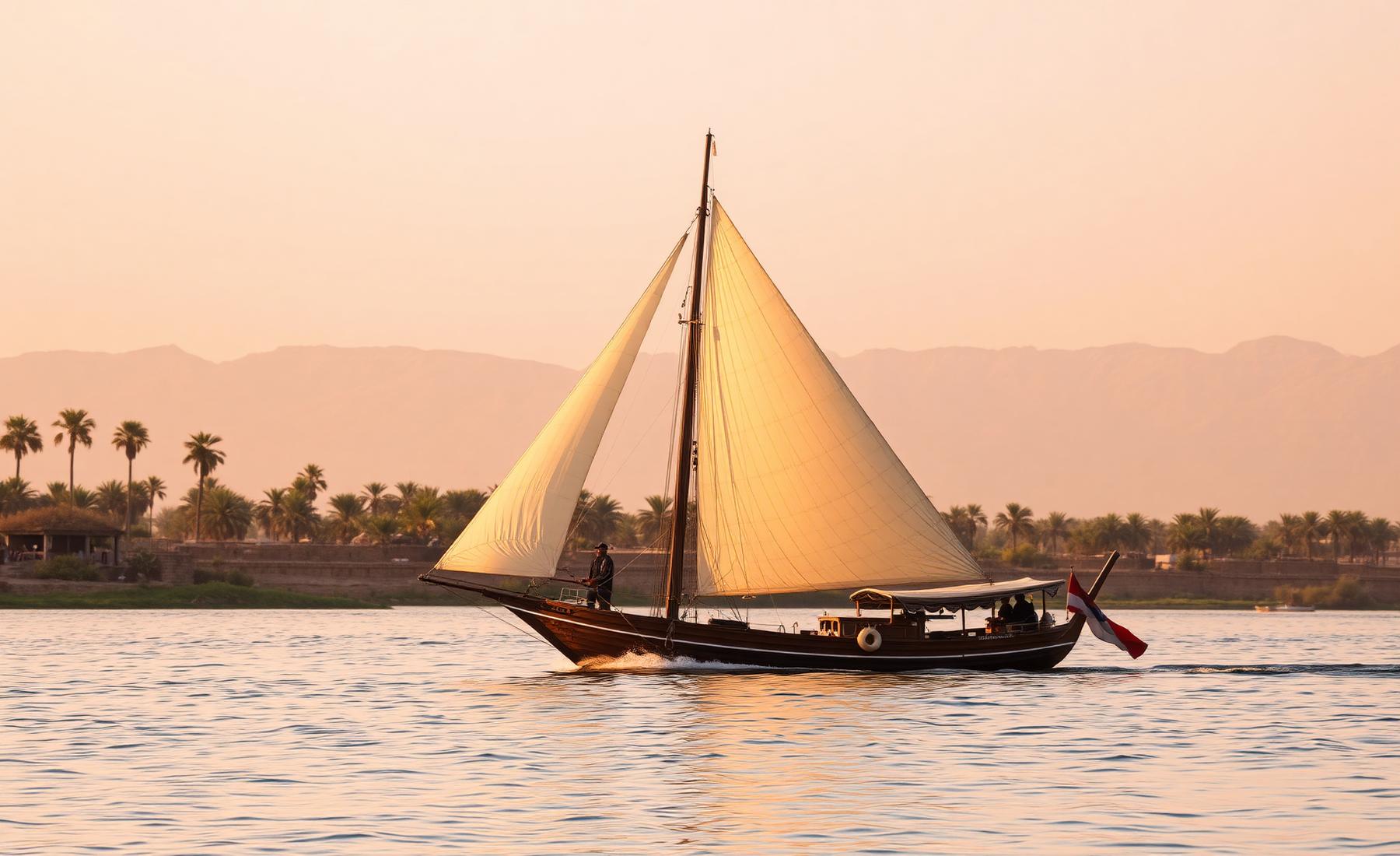
Dahabiya sailing on the Nile at sunset

The Slow River

Nile Cruises, honestly

Four kinds of boat, two directions, one river that has carried Egypt for five thousand years. A guide to choosing, booking and actually enjoying a cruise — including the bits the brochures leave out.

Which boat is right for you?

The single biggest decision. Get it wrong and a week feels like a floating hotel; get it right and the river becomes the trip.

Dahabiya (sailing yacht)

Size
6–12 guests
Pace
Slow, wind-driven, anchors at sandbanks
Price
$$$ – $$$$

Best for — Couples, photographers, repeat visitors who already know the big temples and want quiet villages, no engine noise, and proper night skies.

What's missing — Skips Kom Ombo's main pier crowds entirely; you tender in. No pool, no nightly belly-dance show — by design.

Five-star river ship

Size
80–160 guests
Pace
Engine-powered, fixed schedule, all main temple stops
Price
$$ – $$$

Best for — First-timers who want full guide service, air-conditioned cabins, a sun-deck pool, and the classic Luxor–Aswan temple sequence in 4 nights.

What's missing — Convoy traffic — you'll arrive at Edfu with twelve other ships. The 'authentic' Nile is mostly behind glass.

Long-haul Cairo → Aswan

Size
40–80 guests
Pace
11–14 nights, rare scheduled departures
Price
$$$$ – $$$$$

Best for — Travelers with time who want the whole river: Beni Hassan, Tell el-Amarna, Abydos, Dendera — sites that day-trippers from Luxor never reach in proper light.

What's missing — Only 3–4 operators run this (Sanctuary, Oberoi Zahra, Movenpick Sunray). Books out 9–12 months ahead.

Lake Nasser cruise

Size
40–60 guests
Pace
3–4 nights, Aswan to Abu Simbel
Price
$$$ – $$$$

Best for — Anyone visiting Abu Simbel who wants to see it twice (sunset + sunrise) without the 3am bus convoy. Also: Wadi es-Sebua, Amada, Kasr Ibrim — the rescued Nubian temples no day tour reaches.

What's missing — Only two operational ships (M/S Eugenie, M/S Kasr Ibrim). Genuinely empty water — you may not see another vessel for hours.
Classic Itinerary

Luxor → Aswan, four nights

The default cruise sold by every operator. Here is what each day actually feels like.

  1. Day 1

    Embark at Luxor

    Board after lunch. Most ships moor near Luxor Temple. Afternoon visit to Karnak (allow your guide to lobby for the Open-Air Museum, often skipped). Sail to the West Bank overnight or stay moored.

  2. Day 2

    Valley of the Kings & Hatshepsut

    Early start — leave the boat by 6:30 to beat the heat and the bus convoys. Three royal tombs on the standard ticket; pay extra for Seti I (KV17) if open, it is the finest decorated tomb in Egypt. Afternoon sail south toward Esna lock.

  3. Day 3

    Esna lock & Edfu

    The Esna lock is the cruise's choke point — ships queue for hours. Use the time on the sun deck; the bank life is intimate here. Edfu by horse-cart to the Ptolemaic temple of Horus, the best-preserved temple in Egypt. Sail to Kom Ombo by late afternoon.

  4. Day 4

    Kom Ombo & Aswan

    Visit Kom Ombo at sunset — the double temple of Sobek and Haroeris glows pink, and the small crocodile museum next door is unexpectedly excellent. Arrive Aswan after dark. Felucca sail around Elephantine and the Botanical Garden the next morning.

  5. Day 5

    Philae & disembark

    Boat-taxi to the rescued island temple of Philae (go at opening, 7:00 — it is unbearably hot by 10:00). Optional flight to Abu Simbel. Disembark Aswan; most travelers fly back to Cairo from here.

Practical wisdom

Direction matters

Luxor → Aswan sails with the current and the prevailing wind; lock waits are shorter southbound. Aswan → Luxor is slower but ends in Luxor's denser site cluster — better if you want extra West Bank days at the end.

Avoid Ramadan and August

Ramadan: many West Bank cafes and some temples shorten hours. August: 45°C+ at midday means Karnak by 9am is brutal even for locals. Late October to early March is the season.

Tipping is a system

Boats pool tips; budget roughly $10–15 per guest per day for the crew envelope, plus separate cash for your Egyptologist guide ($10–20/day) and the local site guards who unlock side chambers ($1–2 each).

Bring small US dollar bills

$1 and $5 notes for site tips, restroom attendants, and felucca crews. Larger bills get refused or 'no change' shrugs. ATMs in Luxor and Aswan only dispense Egyptian pounds.

The convoy is real

Five-star ships dock in clusters of 6–10 at Edfu and Kom Ombo. To beat it: be the first off the gangway, walk fast, and brief your guide that you want to start at the back of the temple and work forward — everyone else does the opposite.

Pair the cruise with the sites

Every stop on this page has a full entry in the atlas — read up the night before you sail in.