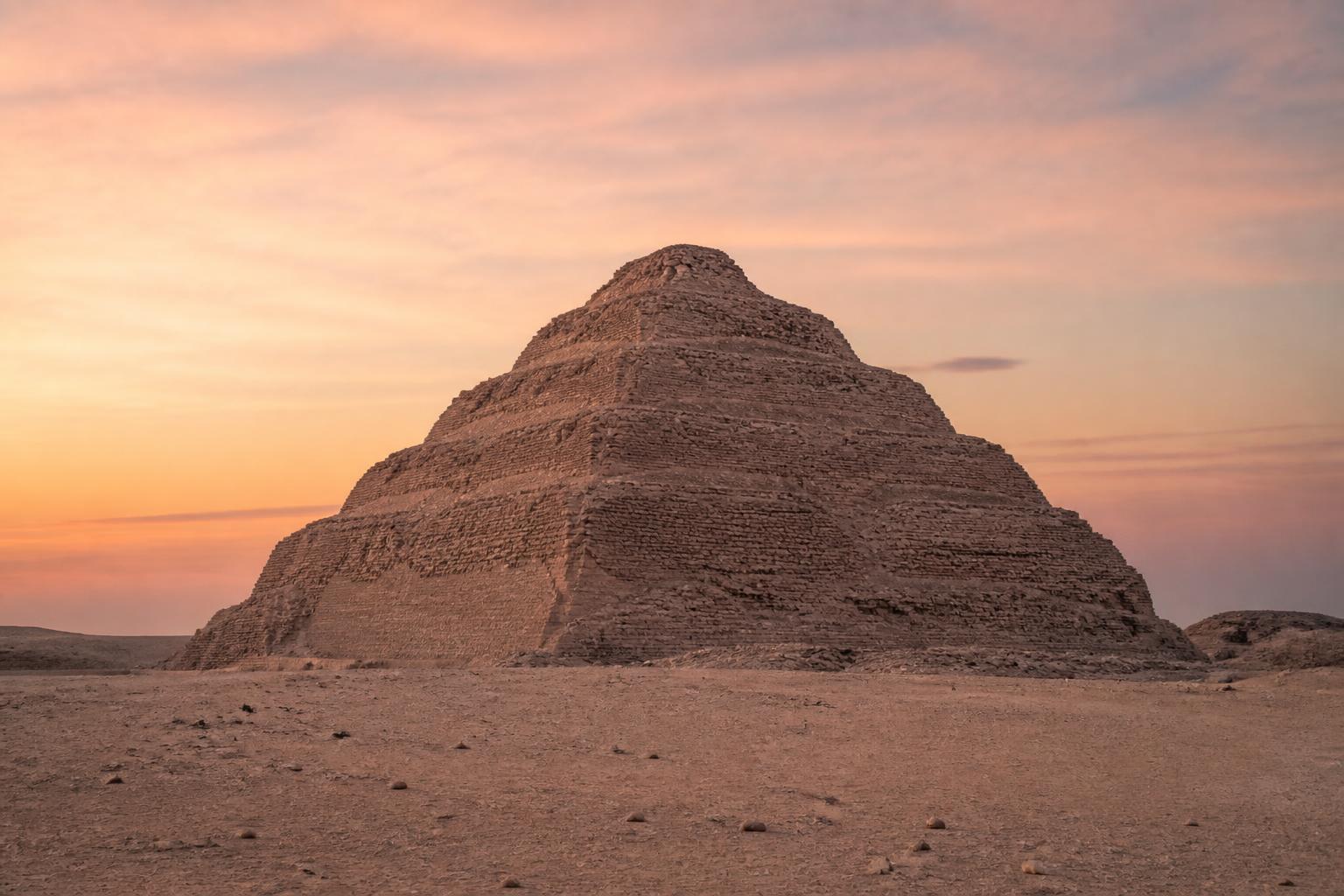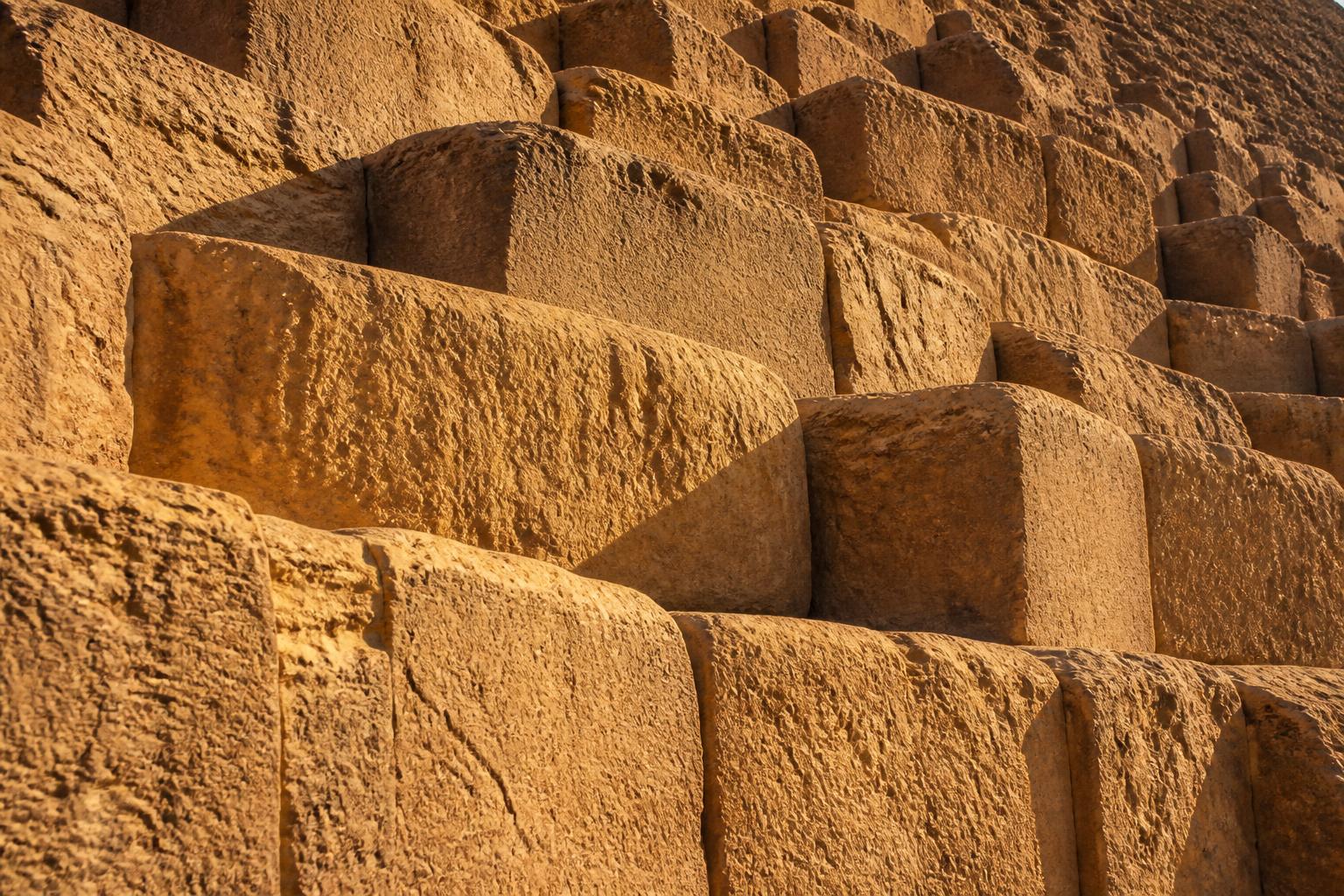
The Giza Plateau
The Atlas

Greater Cairo · Old Kingdom

The Giza Plateau

Khufu, Khafre, Menkaure and the Sphinx

Glance · 60 seconds

Three pyramids, a lion-bodied guardian, and the most photographed plateau on Earth — built across three generations of one Fourth Dynasty family around 2580–2510 BCE.

Context · 5 minutes

Giza is not a single monument but a planned royal cemetery laid out along the desert edge above the Memphite floodplain. Khufu's Great Pyramid was the first and tallest; Khafre's appears taller only because it sits on higher ground and retains a cap of its original limestone casing.

What tourists usually miss is the scale of the support city. Mark Lehner and Zahi Hawass's excavation of the Heit el-Ghurab — the so-called Workers' Town — south of the plateau revealed bakeries, breweries, fish-processing yards and barracks that fed thousands of skilled workmen. The pyramids were not built by slaves; they were built by a rotating national labour force, rationed in bread and beer.

The Sphinx is older and stranger than the guidebooks suggest. Cut from a single knoll of softer limestone left over from the quarrying of Khufu's pyramid, it almost certainly portrays Khafre, though the face has eroded into a more universal grandeur.

What to look for

Khufu's Grand Gallery

An 8.6-metre-high corbelled ascent — the most ambitious piece of stone architecture in the ancient world. Bring water; the air is hot and still.

Khentkaus I's monument

An overlooked stepped mastaba-pyramid on the southeast edge of the plateau, belonging to the queen who bridged the Fourth and Fifth Dynasties.

The Workers' Cemetery

Modest tombs whose inscriptions name the men who 'made the pyramid of Khufu' — the human counterweight to the pharaonic scale above.

Khufu's second solar boat pit

Now empty; the dismantled vessel is reassembled at the Grand Egyptian Museum, ten minutes' drive away.

Scholar · 15 minutes
"John Romer reads Khufu's pyramid less as a tomb than as a vast piece of state-organisation made visible — a single, unified geometry that required a bureaucracy, a survey, and a logistical empire to produce. The casing, he argues, is the real monument; the rubble core was always meant to be hidden."
Romer, A History of Ancient Egypt, Vol. II (2017)
"Pierre Tallet's discovery of the Wadi el-Jarf papyri — the oldest written papyri ever found — gives us the diary of a man named Merer, a middle-ranking inspector who shipped Tura limestone across the Nile for Khufu's casing. For the first time we can name a person who helped build the Great Pyramid."
Tallet & Lehner, The Red Sea Scrolls (2021)
Further reading

The sources behind this entry. Each link opens a Google Scholar search for the work — most have free previews, full PDFs, or library availability.

Also try JSTOR, Academia.edu, and the Egypt Exploration Society.
On the ground
Loading map…

Keep reading

Other sites in the atlas

Thebes (Luxor)

Karnak

The temple that two thousand years could not finish

Memphite Necropolis

Saqqara

Three thousand years of burial above Memphis

Greater Cairo

Egyptian Museum (Tahrir)

The 1902 cabinet of wonders on Tahrir Square

Greater Cairo

Grand Egyptian Museum (GEM)

A walk-around guide to the new flagship beside the pyramids

Greater Cairo

NMEC — National Museum of Egyptian Civilization

The Royal Mummies in Fustat

Greater Cairo

Heliopolis (Matariya)

The ancient Iunu, city of the sun

Memphite Necropolis

Memphis (Mit Rahina)

The vanished capital and a recumbent Ramesses

Memphite Necropolis

Dahshur

The Red and Bent Pyramids of Sneferu

Memphite Necropolis

Abusir

The Fifth Dynasty's quiet royal cemetery

Memphite Necropolis

Abu Rawash

Djedefre's lost pyramid

Memphite Necropolis

Lisht

The Middle Kingdom returns to pyramids

Memphite Necropolis

Meidum

Sneferu's first attempt

Fayum

Hawara

Amenemhat III and the lost Labyrinth

Fayum

Lahun (El-Lahun)

Senwosret II's pyramid town

Fayum

Karanis (Kom Aushim)

A Greco-Roman Fayum farming town

Middle Egypt

Beni Hasan

Middle Kingdom rock-cut nomarchs

Middle Egypt

Tell el-Amarna (Akhetaten)

Akhenaten's heretic capital

Middle Egypt

Tuna el-Gebel

The catacombs of Thoth's ibises

Middle Egypt

Hermopolis Magna (Ashmunein)

City of Thoth

Abydos & Dendera

Abydos

The Osireion and the Seti I temple

Abydos & Dendera

Umm el-Qaab

Tombs of the First Dynasty kings

Abydos & Dendera

Dendera

The Ptolemaic temple of Hathor

Thebes (Luxor)

Luxor Temple

Amenhotep III and Ramesses II in the heart of the city

Thebes (Luxor)

Valley of the Kings

Sixty-five royal tombs in a desert wadi

Thebes (Luxor)

Valley of the Queens

Nefertari's painted chamber

Thebes (Luxor)

Deir el-Bahari

Hatshepsut's terraced mortuary temple

Thebes (Luxor)

Medinet Habu

Ramesses III's fortress-temple

Thebes (Luxor)

The Ramesseum

Ozymandias's fallen colossus

Thebes (Luxor)

Deir el-Medina

The workers' village of the Valley of the Kings

Thebes (Luxor)

Tombs of the Nobles

Sheikh Abd el-Qurna and the Asasif

Thebes (Luxor)

Western Wadis (Wadi Sikkat Taqa el-Zeide)

Piers Litherland's Thutmose II discovery

Thebes (Luxor)

Malkata

Amenhotep III's pleasure palace

Thebes (Luxor)

Colossi of Memnon

The seated kings of the West Bank approach

Esna to Aswan

Esna

The Khnum temple sunk below street level

Esna to Aswan

Edfu (Temple of Horus)

The best-preserved temple in Egypt

Esna to Aswan

Kom Ombo

The double temple of Sobek and Haroeris

Esna to Aswan

Gebel el-Silsila

The great sandstone quarry of the Nile

Esna to Aswan

El-Kab

The Predynastic walled town of Nekheb

Aswan & Nubia

Elephantine Island

The southern frontier of Egypt

Aswan & Nubia

Qubbet el-Hawa

The rock-cut tombs of the Aswan governors

Aswan & Nubia

Philae (Agilkia Island)

The last temple of Isis

Aswan & Nubia

Abu Simbel

Ramesses II's cliff facing the rising sun

Delta

Tanis (San el-Hagar)

The silver coffins of the Third Intermediate Period

Delta

Avaris / Pi-Ramesses (Tell el-Dab'a)

The Hyksos capital and Ramesside city

Delta

Bubastis (Tell Basta)

The cat-goddess Bastet's home

Delta

Sais (Sa el-Hagar)

Capital of the Twenty-Sixth Dynasty

Alexandria & Coast

Catacombs of Kom el-Shoqafa

Alexandrian funerary fusion

Alexandria & Coast

Pompey's Pillar & the Serapeum

What's left of the great library's neighbour

Alexandria & Coast

Heracleion / Thonis (Underwater)

Goddio's sunken port

Sinai

Serabit el-Khadim

Hathor of turquoise and the proto-Sinaitic script

Sinai

St. Catherine's Monastery

Sixth-century library at the foot of Sinai

Eastern Desert

Wadi el-Jarf

Khufu's harbour and the oldest papyri in the world

Eastern Desert

Wadi Hammamat

The greywacke quarry of the desert road

Western Desert

Siwa Oasis — Oracle of Amun

Where Alexander asked the question

Western Desert

Bahariya Oasis — Valley of the Golden Mummies

Greco-Roman desert necropolis

Western Desert

Kharga — Bagawat & Hibis

Persian-Egyptian temple and Coptic necropolis

Middle Egypt

White Monastery (Deir al-Anba Shenouda)

Shenoute's fifth-century basilica