Still very much open, still extraordinary. Around 120,000 objects across two dusty, beautifully faded floors on Tahrir Square — the Narmer Palette, the Sheikh el-Balad, the Meidum Geese and dozens of other masterpieces that never left when Tutankhamun and the royal mummies moved out to GEM and NMEC.
Designed by French architect Marcel Dourgnon and opened in 1902, the Egyptian Museum at Tahrir is the oldest archaeological museum in the Middle East and for over a century was the single greatest repository of pharaonic art on earth. The pink neoclassical building was purpose-built to hold the collection Auguste Mariette had been assembling at Boulaq since 1858 — and it still wears that 19th-century cabinet-of-wonders character, with crowded vitrines, hand-typed labels and skylit galleries that have barely been re-hung in fifty years.
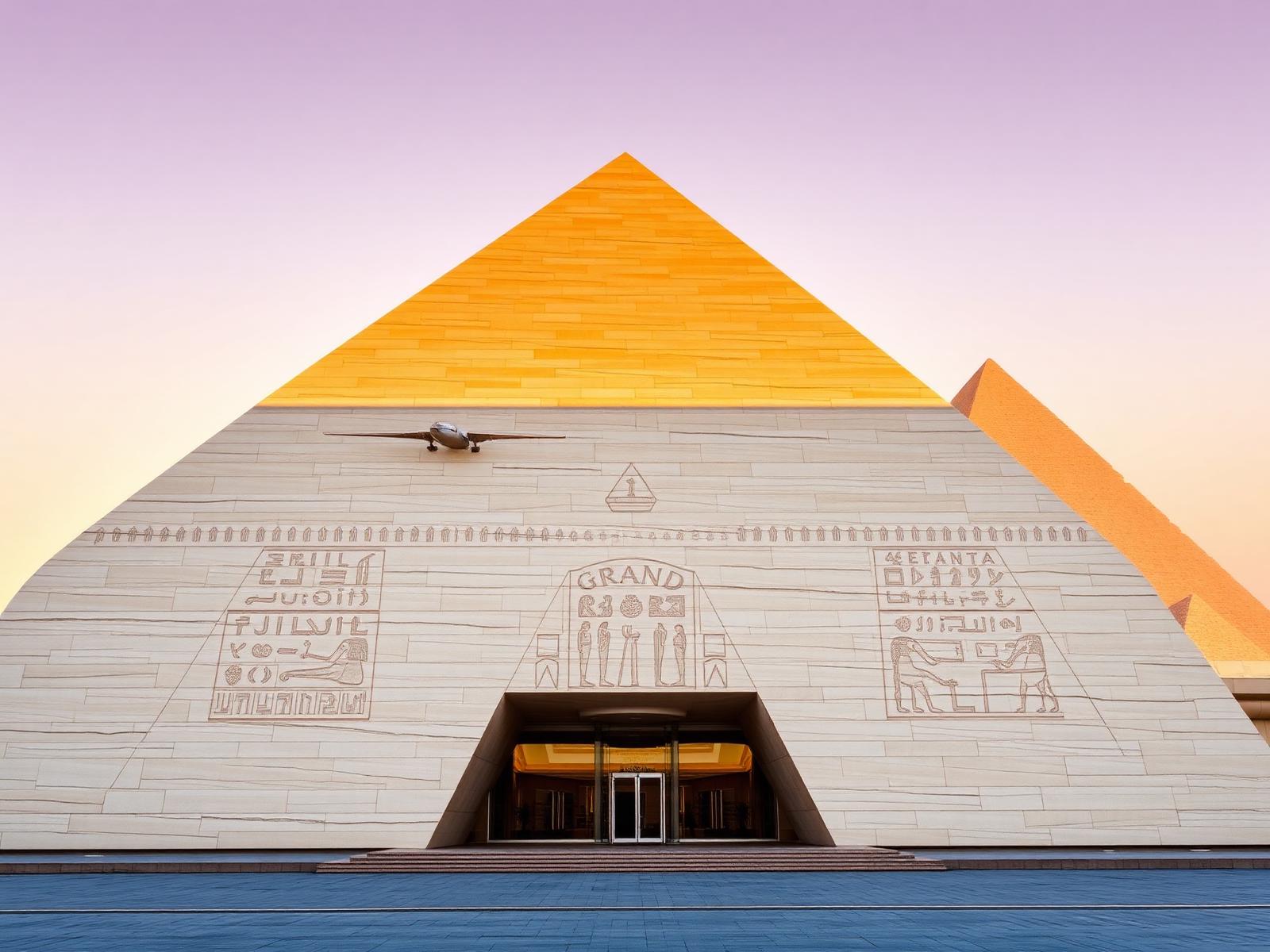
The headlines have moved on. Tutankhamun's complete tomb assemblage is now at the Grand Egyptian Museum in Giza; the royal mummies were transferred in 2021 to the National Museum of Egyptian Civilization in Fustat in the televised Pharaohs' Golden Parade. But the Tahrir building is having a quiet renaissance: staff are refreshing old displays, temporary exhibits explore lesser-known threads (perfume, Fayoum, women's lives), and a still-vast permanent collection rewards anyone willing to slow down.
What stays here is, in a sense, the deeper collection — predynastic palettes, Old Kingdom masterworks in stone and wood, Middle Kingdom royal portraits, jewellery from Tanis, the Amarna heads of Akhenaten and Nefertiti's family. A focused half-day around the ground-floor galleries 32–48 takes you through the foundational works that defined Egyptology in the first place.
Narmer Palette — Ground floor, Gallery 43
The first historical document in the world. A 63 cm siltstone cosmetic palette from c. 3100 BCE showing King Narmer in the white crown of Upper Egypt on one face and the red crown of Lower Egypt on the other — the unification of the Two Lands carved at the very moment writing was invented. Found at Nekhen (Hierakonpolis) by Quibell and Green in 1898.
Seated Statue of Djoser — Ground floor, Gallery 48
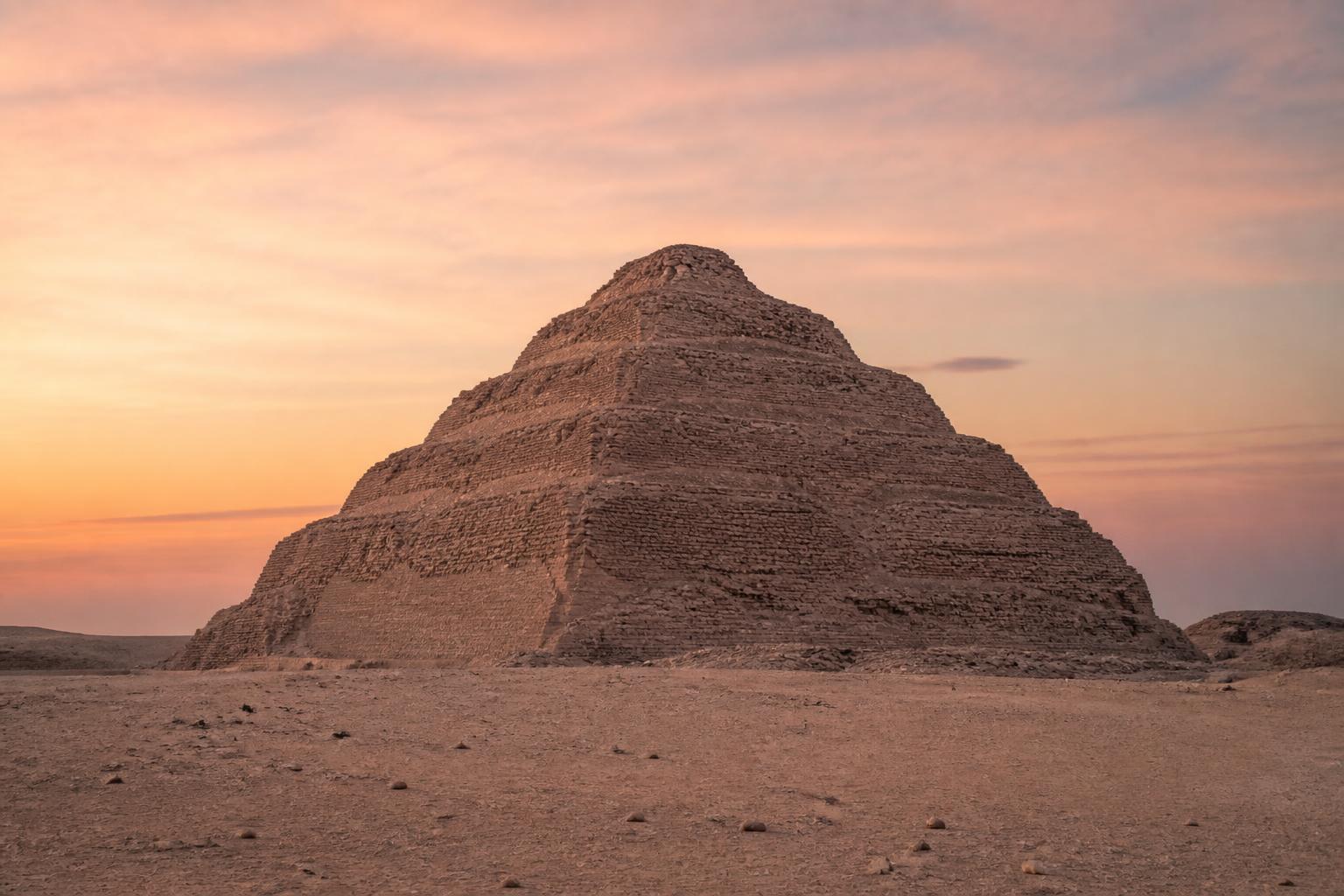
The oldest known life-size Egyptian statue. Painted limestone, c. 2670 BCE, originally walled into the serdab beside Djoser's Step Pyramid at Saqqara with a peephole for the king's ka to look out at offerings. Eyes once inlaid with rock crystal — the empty sockets are still hauntingly direct.
Menkaure Triads — Ground floor, Gallery 47
Menkaure flanked by Hathor and a nome goddess, in dark schist of impossible smoothness. One of five triads excavated by George Reisner in 1908 at the Valley Temple of Menkaure beside the third Giza pyramid. Look for the individually modelled clavicles and kneecaps.
Statue of Khafre with Horus — Ground floor, Room 42
Khafre enthroned in diorite shipped 1,200 km from the Nubian desert, with the falcon Horus folded around the back of his head — visible only from the side. The Sphinx wears this face. A masterpiece of royal theology compressed into a single block.
Ka-aper, the 'Sheikh el-Balad' — Ground floor, Room 42
A 5th-Dynasty sycamore wood statue so lifelike that Mariette's diggers at Saqqara in 1870 named it after their village headman — the label still uses the nickname. Bald, plump, with copper-and-rock-crystal eyes that catch you across the room. One of the few wooden statues to survive intact from the Old Kingdom.
Meidum Geese — Old Kingdom gallery
Sometimes called 'Egypt's Mona Lisa.' A painted plaster frieze of six geese from the Meidum tomb of Itet, c. 2600 BCE, with colour and feather detail so fresh it has periodically been (wrongly) accused of being a 19th-century forgery. The species don't quite match anything alive.
Rahotep and Nofret — Ground floor, Room 32
A painted limestone seated pair from Meidum, c. 2600 BCE — Rahotep almost certainly a son of Sneferu and brother of Khufu. Inlaid rock-crystal eyes so uncannily alive that the workman who first lowered a candle into the tomb reportedly fled in terror.
Ivory Statuette of Khufu — Ground floor, Room 32
The only intact portrait of the builder of the Great Pyramid — and just 7.5 cm tall. Found by Flinders Petrie at Abydos in 1903; the head was missing on discovery and recovered three weeks later after Petrie offered a reward and stopped all other digging.
Mentuhotep II — Ground floor, Gallery 26
Vivid painted sandstone seated statue of the king who reunified Egypt and founded the Middle Kingdom, c. 2050 BCE. Skin painted Osirian black for rebirth, dressed for his sed-festival jubilee. Found by Howard Carter in 1900 near Deir el-Bahri — by accident, when his horse's leg broke through into the hidden 'Bab el-Hosan' shaft.
Tanis treasure — Upper floor
The silver coffins, gold masks and jewellery of Psusennes I and his Third Intermediate Period successors, excavated by Pierre Montet at Tanis in 1939–1940 on the eve of World War II. Often called 'the other Tutankhamun' — and now, with King Tut gone to GEM, the single greatest gold collection still on Tahrir.
Amarna Room — Upper floor
Akhenaten's colossal Karnak statues with their elongated faces and bellies, the painted pavement from the Maru-Aten, plaster studies from Thutmose's workshop, and the small unfinished quartzite head of Nefertiti that complements the Berlin bust. The most concentrated experience of Amarna art anywhere.
Yuya and Tjuyu — Upper floor
The intact 18th-Dynasty burial of Tutankhamun's great-grandparents, found by Theodore Davis in KV46 in 1905. Gilded coffins, chariots, a wig box, the famous portrait masks — the richest non-royal burial ever discovered and, until 1922, the benchmark for what an Egyptian tomb could yield.
"The mummies have moved to NMEC; King Tut has moved to GEM. Tahrir is not closing. Staff are working overtime to freshen up old displays, there are exciting temporary exhibits on lesser-known aspects of Egyptian civilization — perfume, Fayoum — and dozens of absolute masterpieces remain that you cannot really see anywhere else."
"The Tahrir museum was always too small for what it held — Mariette's collection had outgrown Boulaq before Dourgnon's building was even finished. Reading the Tahrir galleries today is like reading a 19th-century library: cabinet by cabinet, organised by acquisition rather than narrative, with the labour of generations of curators visible in the layers of paint and hand-typed cards."
The sources behind this entry. Each link opens a Google Scholar search for the work — most have free previews, full PDFs, or library availability.
- Reid, Donald Malcolm — Whose Pharaohs? Archaeology, Museums, and Egyptian National Identity (2002)
- Naunton, Chris — Egyptologists' Notebooks (2020)
- Tiradritti, Francesco (ed.) — Egyptian Treasures from the Egyptian Museum in Cairo (1999)
- Saleh, Mohamed & Sourouzian, Hourig — Official Catalogue: The Egyptian Museum, Cairo (1987)
- Watts, Dee — 'The Ultimate Guide to the Egyptian Museum in Tahrir,' vanillatravels.net
Also try JSTOR, Academia.edu, and the Egypt Exploration Society.